REDMOND GARDEN CLUB
  • Home
  • About
    • Join Us
  • Learn
    • Tips and Tricks
    • Book Reviews
  • Events
  • Plant Sale
  • FAQ
  • Contact

Books that will help YOU grow


April 07th, 2026

4/7/2026

0 Comments


    I have selected two books for our January book review, with a third as an honorable mention. I have selected all the books as a celebration of our native environment, which goes along with our speaker's subject of Mason Bees.
    The first is, Braiding Sweetgrass, Indigenous Wisdom, Scientific Knowledge, and the Teachings of Plants, by Robin Wall Kimmerer. This has been my favorite book for years. It is one you will want to re-read for its knowledge, philosophy and view of plant/animal reciprocity and generosity in the natural world.
    As a botanist, the author trained to ask questions of nature with science. As a member of the Potawatomi nation, she embraces the notion that plants and animals are our greatest teachers. She brings this knowledge together to show a that a wider ecological consciousness requires the acknowledgement and understanding of the reciprocal relationship we have with the living world, and an understanding of the generosity of the Earth. She does so through a beautiful journey with images of giant cedars, wild strawberries, gathering wild leeks and a meadow of fragrant sweetgrass.
    The second book is, Native Plant Gardening for Birds, Bees & Butterflies: Pacific Northwest, by Jaret C. Daniels. This is a beautiful fully illustrated book about native plants which support our native fauna. The beginning of the book includes gardening basics and identification of a few types of pollinators, including photos of bees, moths, butterflies and other pollinators. The book also includes a handy chart which includes hardiness zone, light level, soil preference and which pollinators, including birds, are attracted to each plant. However, the bulk of the book is a gorgeous full color photo and description of each native plant. This portion is divided in three sections: Full Sun, Full Sun to Partial Shade, and Partial Shade to Full Shade. The book concludes with charts/photos tying specific plants to specific pollinators, including Bird Food and Nesting Plants and Hummingbirds.
    The Honorable Mention book is, Mason Bee Revolution, 2nd Edition, How the Hardest Working Bee Can Save the World One Backyard at a Time, by Dave Hunter and Jill Lightner. This is an update of Dave's classic book on everything to know about raising Mason Bees. Dave is the founder of Crown Bees based in Woodinville. Dave and I have been friends for over 20 years, and he gave me an autographed copy of the book which I am happy to share with the club. This again is a beautifully illustrated book which includes everything from pollinator plant selection to bee types, homes and care, to pests, to the impacts of pesticides and some alternatives. The book includes some guest authors and insight into other pollinators including hummingbirds, bats and butterflies. It also includes insights into commercial operations and pollinator research projects. Thus, whether you have had mason bees for 20 years, or are new to it, there is new information for all.

0 Comments

February Book Reviews

2/28/2025

1 Comment

 
Picture
Picture
Picture
Picture
Pruning & Training, Revised New Edition:  What, When, and How to Prune by Christopher Brickell & David Joyce

There are thousands of Gardening books.  I choose this book because at our Feb 2024 RGC meeting, our guest speaker said this book was his ‘bible’ AND that he uses it often for reference. That was a good recommendation.  After reading the first 14 pages of the Introduction – ‘How Plants Grow, Principles of Pruning and Training, and Tools and Equipment’ – you’ll learn the basics and be able to converse intelligently about pruning.  In addition to educating us on the basics of pruning in the Introduction, every subsequent chapter deals with pruning specific plants, such as Ornamental trees, Tree fruits, Ornamental shrubs, soft fruits, Climbing plants and Roses.  At the end of each chapter is a dictionary (with pictures!) of those plants and trees with color illustrations of the correct pruning cuts.  ​
​
Wicked Plants by Amy Stewart

For the RGC Book Review, I select a “How to” Book and a “Garden Related Fun Book”.  This book is the ‘FUN READING’ book. But it could be used as a “How to” book - if you want to know how to poison someone with plants. This little gem of a book is not only visually appealing as a coffee table book – it includes beautiful etchings and drawings.  The author said she wrote this book because ‘I was fascinated with the idea that there are evildoers in the plant kingdom ..." 
​
Foraged Art is all about how we can learn to play with art, meditation, and nature with projects from this book that take inspiration from the natural environment. Foraging is not just for shroom hunters, but for opening our eyes to the uses of blooms, pods, branches, stones, and other natural elements to create meaningful art in all seasons. With quotes by artists on nature and creativity, the book is about making art from what you find and finding art in what you see. 
​
​
​The "Northwest Gardens of Lord and Schryver” is one I’m betting you’ve not heard about. These two Oregon women in the once male-dominated profession of landscape design were trendsetters of their day. Their contributions are chronicled here to provide inspiration to all gardeners interested in PNW history, horticulture, and garden design. This nonfiction inspirational account will provide a background of how our gardens have evolved through the efforts of pioneers like these two. Thanks to Lori, best of luck and Happy Reading!
Picture
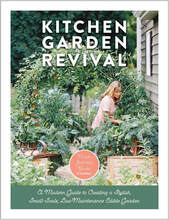
Kitchen Garden Revival by Nicole Burke

​This book entices one to think a little outside the box (or rather in it) while creating raised vegetable gardens. The author owns Rooted Garden a design firm based in Houston. That made me cautious until I saw that she also has offices in Chicago but with two such diverse climates, it was worth checking out.

The book is good for the novice gardener as well as the more experienced. It is broken down eight sections going from site planning to harvesting, without jumping around, encouraging the gardener to discover their own growing zone rather than go with the broader ones listed in most resources. She walks you though the process with lots of lovely and useful photos while breaking down and detailing every step to a successful harvest. From creating the perfect soil to timing the plantings, to making sure you have the tools you need, it even helps shrink the massive world of
available seeds for you to choose from in the space you have available.

It appears at first to be mostly a book for the novice but as you read on there is so much more there that isn’t just rehashed information. My favorite quote might just be “but here’s my advice: Don’t read the plant tags”. She also connects the reader to her site Gardenary.com/book to sign up for her free journal for use as you grow your kitchen garden.
Picture
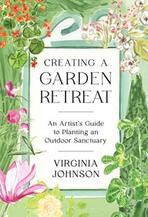
Creating a Garden Retreat by Virginia Johnson

I didn’t expect to find a lot of useful information when I first read this book last spring as the author is writing about her property - a city backyard in the Toronto area - and I live away from the city in a garden filled yard. But the way she speaks of her garden and tells of its process resounds to anyone who wants something other than hardscape when they walk into their yard. Virginia Johnson is an artist as you can see from her watercolor sketches throughout the book but she is also a busy woman multitasking her way through each day.

The book tells us that there are so many wonderful ways to create a garden and that they are all worth it and still reminds that gardens grow and change over the years and that it is okay for them to do so. Gardening is work, but it is also fun! She also owns up to her errors and in doing so lets the reader off the hook for theirs.

The book discusses plants by groups, trees & shrubs, herbs/fruits/vegetables, flowers, vines and extols the virtues of her personal favorites in prose that makes you want to add them to your garden as well. It allows the garden to be whatever size you have and encourages you to enjoy it. Inviting one to see how she lives in her garden with her family and animals and other residents who share the space. She talks about the many ways she uses her garden and the way it expands to their life inside and out. I haven’t ordered them yet but I even ended up wanting the sneakers she loves!
Picture

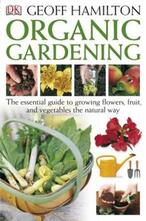
Third a comprehensive resource book Organic Gardening by Geoff Hamilton

​I really enjoy books by British writers as the climate there is so similar to that of the Pacific Northwest and this is one more book that is really useful for our area.

Organic Gardening is wonderful reference guide for anyone who wants to create a beautiful and healthy garden. One that will give you joy while protecting the world in which we all live. The author was an early advocate of organic gardening and established those processes when he created Barnsdale Gardens in England.

This book will help the reader gain the knowledge to become more aware of the use of natural methods that benefit both the garden and the world around it. It starts
with the basics: soil, fertilizer, pest control, things that are pertinent for any garden.

As the book continues it focuses on different types of gardens, vegetable, herb, containers and greenhouses. Then it moves to the techniques for daily care, cultivation and propagation. It is filled with lots of drawings and photographs with details on a wide variety of processes as well as plants to make it easy to follow in your own garden, a true blend of classic tradition gardening with newer technology.

“Don’t underestimate the therapeutic value of gardening. It’s the one area where we can all use our nascent creative talents to make a truly satisfying work of art. Every individual, with thought, patience and a large portion of help from nature, has it in them to create their own private paradise: truly a thing of beauty is a joy for ever.” - Geoff Hamilton
Picture
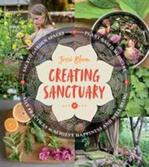
 Lastly a very interesting local book Creating Sanctuary by Jessi Bloom

​I bought this one last August after listening to Jessi speak at an class held by Christianson’s Nursery. She spoke so earnestly I wanted to be able to have the book to remind myself of what she had to say. Rereading it in preparation for reviewing it was even more interesting as I had time to start to decide how her knowledge fit what I want my garden to improve and grow.

​She breaks things down into a number of categories making it easy to read and there is a lot of information that can be referenced in the future, recipes, plant descriptions etc.

It is divided into sections.

The first, Creating Sacred Space, is about turning a garden into your sanctuary, a place where you can benefit the most.

The second, Botanical Alchemy, lists lots of plants that can build up the layers that make your garden what you need it to be. It also teaches how to grow, harvest and use them to live a healthy life.

The final category, Nurturing Self, speaks of how you can live a better life in the garden you have grown.

Throughout the book she shares photographs taken during her travels of modern and ancient gardens and healing places. 

Creating Sanctuary really rethinks what a garden can be and defends the idea that there is no wrong way to use your space. If it is healthy and you love it…it is right.  This is not a garden book, yet it is about living with your garden space and how it affects your life. The author is a local ecological landscape designer and has written several other books.
1 Comment
Proudly powered by Weebly
  • Home
  • About
    • Join Us
  • Learn
    • Tips and Tricks
    • Book Reviews
  • Events
  • Plant Sale
  • FAQ
  • Contact